Have a project? jacquieazur@gmail.comSettling in, living well, enjoying the Côte d'Azur
Your guide to the South of France
The South of France · No. 3October 2026 · Free
OCTOBER, THE MONTH LOCALS KEEP QUIET ABOUT
The sea is still warm, the chestnuts are on the fire and the whole coast finally has time to talk.
If I could only keep one month on the Côte d'Azur, I think it might be October. The light turns low and golden. After the first autumn rain the air clears and the mountains look close enough to touch. The villages celebrate the harvest with chestnuts roasting in the square, the markets fill with mushrooms and late figs and suddenly the waiter has time to chat. October is also the month the year quietly turns. The Toussaint school holidays begin, the clocks go back an hour and by late afternoon the light is already fading. This month I'm sharing the fêtes I'd go to, where I'd still swim, a closer look at Valbonne and what October means if you're thinking about buying or selling a home here. Welcome to October!
By Jacquie
I moved to the Côte d'Azur twice before making it home. Now a local real estate agent, I share what I wish someone had told me.
The turn of the year
Toussaint, the clocks and the first real rain
In September I said la rentrée is the real new year here. October is when that new year settles into its rhythm and three things change almost at once. None of them are on the tourist calendar, but all of them shape daily life.
The Toussaint holidays. Schools break up on Saturday the 17th of October and go back on Monday the 2nd of November. For two weeks the morning roads are easier again, families slip away for a few days and the museums and parks fill up on weekdays. If you have a child in a French school, this is the first proper break of the year. Believe me, it comes round faster than you expect.
The clocks go back. In the early hours of Sunday the 25th of October, three in the morning becomes two. I always enjoy the extra hour of sleep and always miss the hour of evening light. From that week the sun sets before most people have left work and the apéritif quietly moves indoors.
The first real rain. Autumn here often brings what the French call an épisode méditerranéen: a great deal of rain in a very short time, usually over the hills behind the coast. Most years it passes with nothing worse than a flooded road or two. Occasionally it does not. Storm Alex, on the 2nd of October 2020, did lasting damage in the Roya, Vésubie and Tinée valleys and nobody here has forgotten it. Météo-France colours each department green, yellow, orange or red according to the risk and when the Alpes-Maritimes goes orange (vigilance orange), I take it seriously: move the car off low ground, stay away from flooded roads and save the drive inland for another day.
What's on
Jacquie's October picks
October has fewer events than the summer and I think that is part of its charm. My picks for the rest of the month are smaller and more local: a mountain town best reached by train, two harvest fêtes and a museum in Nice for a rainy day, as well as Halloween in Valbonne and one Sunday I'd keep free. These are the ones I'd put in my own calendar.
Until April 2027 · Nice
De la scène à la toile, Musée des Beaux-Arts Jules Chéret
My rainy-day pick. The fine arts museum in Nice has rehung its collection around the Belle Époque: singers, actresses, composers and society hostesses painted in costume and in the latest fashions, a portrait of the cosmopolitan Nice of the years before 1914.
The museum itself, a Belle Époque villa on the Baumettes hill, is half the reason to go. This one runs until April, so there's no rush, but on the first wet Sunday of the autumn it is exactly where I'd want to be.
Saturday October 17 · Saint-Laurent-du-Var
Fête des vendanges et châtaignes
The old village above the Var celebrates the harvest: grapes pressed in front of you, grape juice to taste, socca and chestnuts roasted in the pan. From 10 a.m. to 6 p.m., free, with food stalls from midday.
If you have children, this is the one I'd take them to. Watching the grapes being pressed never gets old.
Sunday October 18 · Saint-Paul-de-Vence
And one Sunday I'd keep free…
In Saint-Paul-de-Vence itself, the village's Fête des vendanges et des châtaignes (its grape harvest and chestnut fête) takes over the Place de Gaulle, the square with the boules pitch at the entrance to the old village, from 10 a.m. to 6 p.m.: local winemakers, olive oil, cheese and honey, roasted chestnuts, mulled wine, socca and courgette flower fritters, with music all day. Entry is free.
My plan: wander the fête in the morning, then walk up to the Fondation Maeght for Ellsworth Kelly: Aux bords de l'eau, which runs until the 15th of November. I suggested it in September; if you haven't been yet, this is the day. Chestnuts in the square and one of the great art foundations in the afternoon is my idea of a perfect October Sunday.
Saturday October 24 · Saorge
Fête de la châtaigne
Saorge is the village that seems to hang in the air, its houses stacked up a rock face above the Roya gorge and on the 24th it celebrates the chestnut. Roasting pans in the lanes, local produce and the whole village out for the day. I can't think of a more dramatic setting for a castagnade.
My pick: leave the car at home and take the train from Nice. The ride up the Roya valley is half the pleasure. The station is below the village, so wear good shoes for the walk up and check the Saturday times on SNCF Connect before you go.
Saturday October 31 · Valbonne
Halloween in Valbonne
Halloween is still a fairly new tradition in France and many French families are thinking more about Toussaint the next day. Valbonne is the exception. Every year the children go trick-or-treating and it has become a real village tradition: costumes and bags of sweets, with so many international families around Sophia Antipolis joining in. This year it falls in the school holidays, so expect a lot of little witches and ghosts.
For the grown-ups, there's also a night trail run around Valbonne that evening, with 15 km and 9 km courses, a kids' trail and a score-orienteering race. If you run, sign up. If you don't, head-torches in the woods on Halloween night are quite a sight from the sidelines.
If you want to eat out that night, I highly suggest booking a restaurant well in advance or heading to one of the local watering holes. Roots will be overflowing, as usual.
Where the locals swim
The last swims of the year
The sea keeps its summer warmth for weeks after the air has cooled and I try to squeeze in as many swims as I can before it finally turns. The rule changes, though. In August I gave you the eight o'clock rule. In October I swim at midday, when the sun is highest and the pebbles are warm. Here are three I'd choose this month.
Villefranche-sur-Mer · Midday
Plage des Marinières
A long beach curving round one of the deepest and most sheltered bays on the coast. On a still October day the water is often like glass.
When I'd go: around noon on a weekday, then lunch in the old town by the harbour.
Jacquie's tip: take the train. The station is right above the beach.
Antibes · Lunchtime
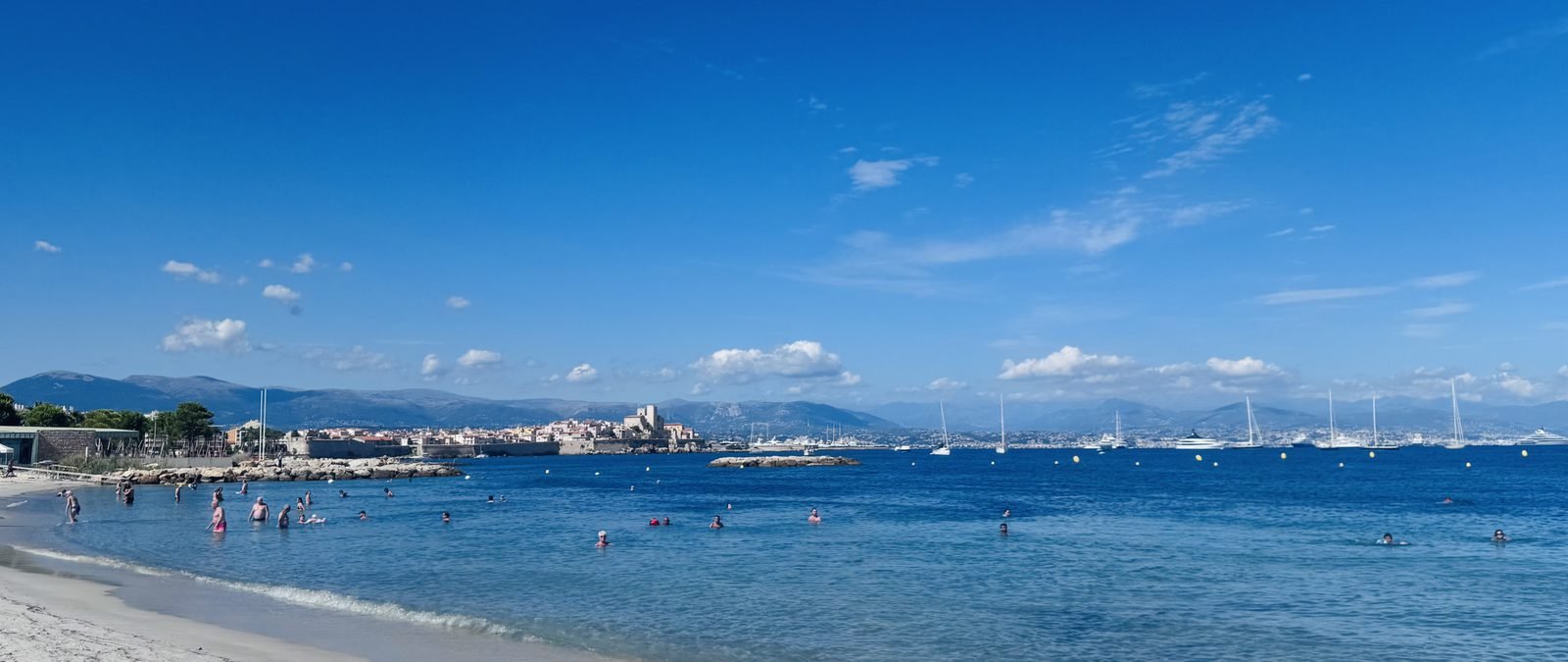
Plage de la Salis
We lived inside the walls of Antibes when we first moved here and it is a view I love: the ramparts across the bay, with the Alps behind them on a clear day. It's an easy walk from the old town.
When I'd go: late morning, with lunch to eat on the beach. Either pick up a gourmet takeaway lunch from PIC-NIC or buy from the Marché Provençal.
Juan-les-Pins · Midday
Plage de la Pinède
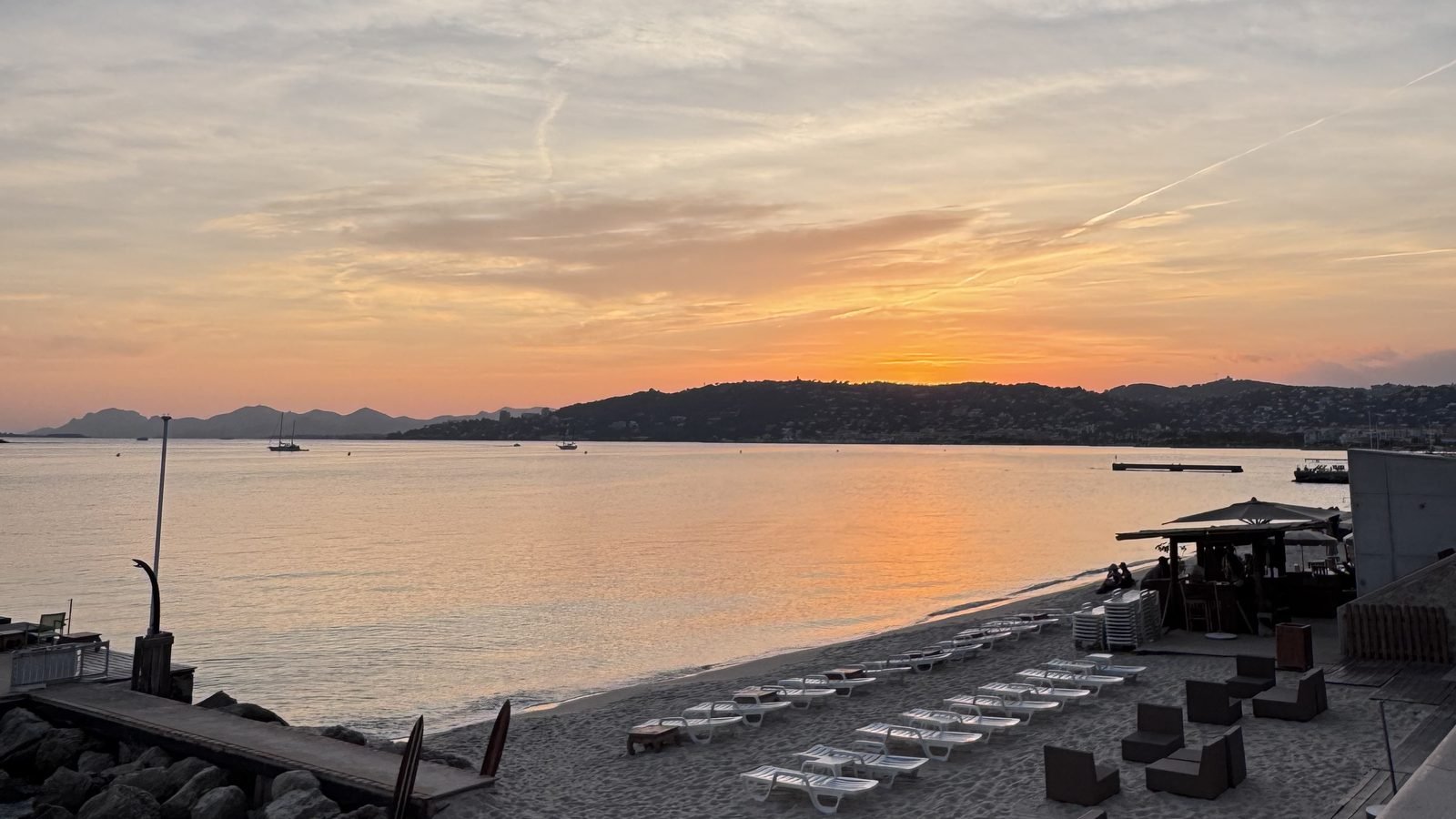
The long sandy beach in front of the pine grove, with the whole bay of Juan-les-Pins in front of you. In summer it's shoulder to shoulder and finding a parking space is a sport in itself. In October you can usually park nearby without a fight and the beach has room to breathe again.
When I'd go: midday, when the sun is at its highest and the sand is warm. Pack a picnic and a bottle of wine and make a long lunch of it between swims.
Jacquie's tip: bring a proper corkscrew and real glasses. A long October lunch by the sea deserves better than plastic cups.
The village of the month
Valbonne, the village drawn with a ruler
Each issue takes one place and tells it properly: what it is really like, what's worth seeing and when to go. This month I'm staying close to home. Valbonne is just a few minutes from Biot, up the Brague valley. It also happens to be the village where I work, with a commute of under 20 minutes each way, and the Wretman Estate office is a short walk from the village centre, just across from the town hall. I think Valbonne deserves much more than a quick coffee on the square.
What I find fascinating about Valbonne is that, unlike almost every other hill village here, it was planned. Most grew lane by lane around a castle or a church. Here, in 1519, the monks of Lérins who owned the land decided to bring the valley back to life and laid out a new village on a grid: straight streets about four metres wide, crossing at right angles. Five centuries later the plan is still there. It is one of the reasons the village is so easy and so pleasant to walk.
The abbey came first. Monks of the Chalais order settled here in 1199 and their Romanesque church, finished around 1230, is now the parish church at the top of the village. They chose the spot partly for their sheep, which came down to winter in the Brague valley.
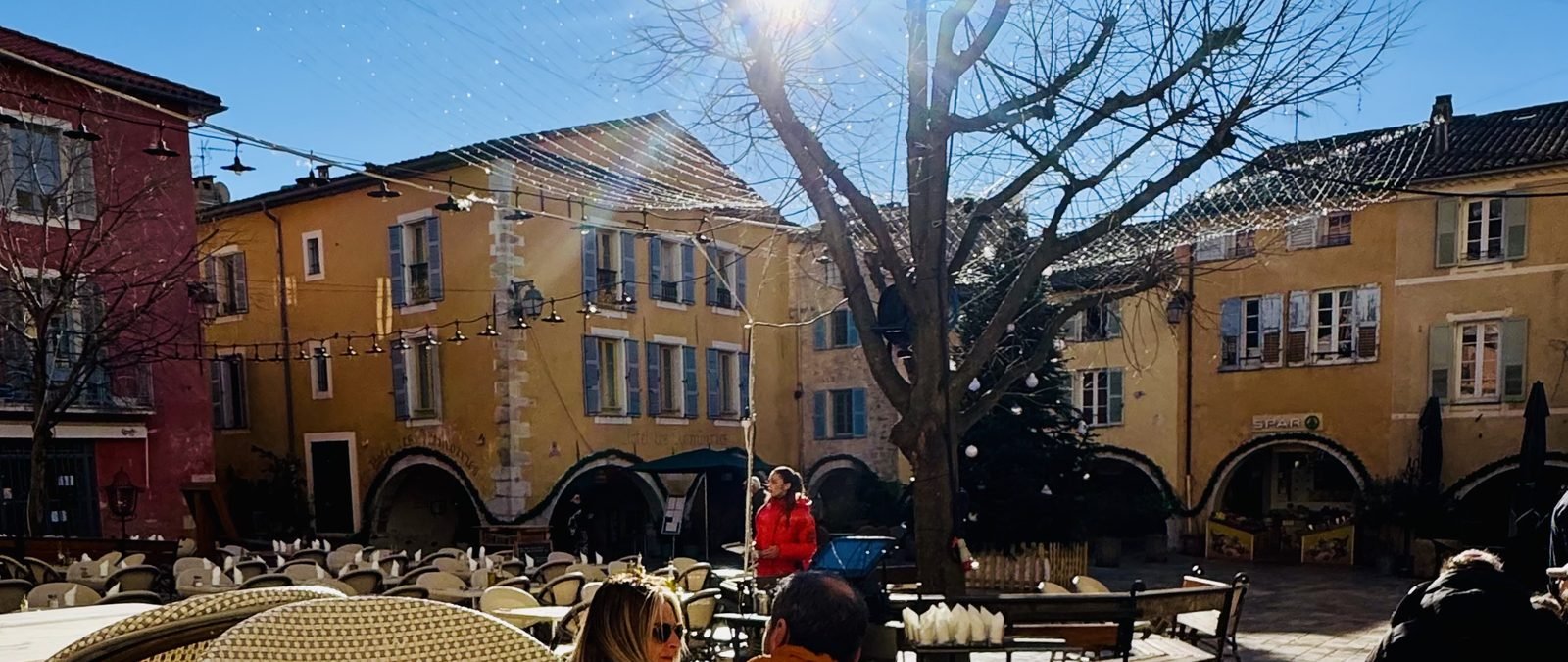
Everything comes back to Valbonne's own Place des Arcades, built in the early seventeenth century and listed as a historic monument. The market, the cafés and most of village life happen under or around its arcades and it is where I'd start any visit.
Valbonne also has a character of its own. Sophia Antipolis, the technology park created on its land in the 1970s, brought engineers and researchers from all over the world and many of them stayed. With several international schools close by, you will often hear English at the next table. For anyone moving here from abroad, I think it is one of the easiest places on the coast to settle in.
A day in the life
How I'd spend a Sunday this month
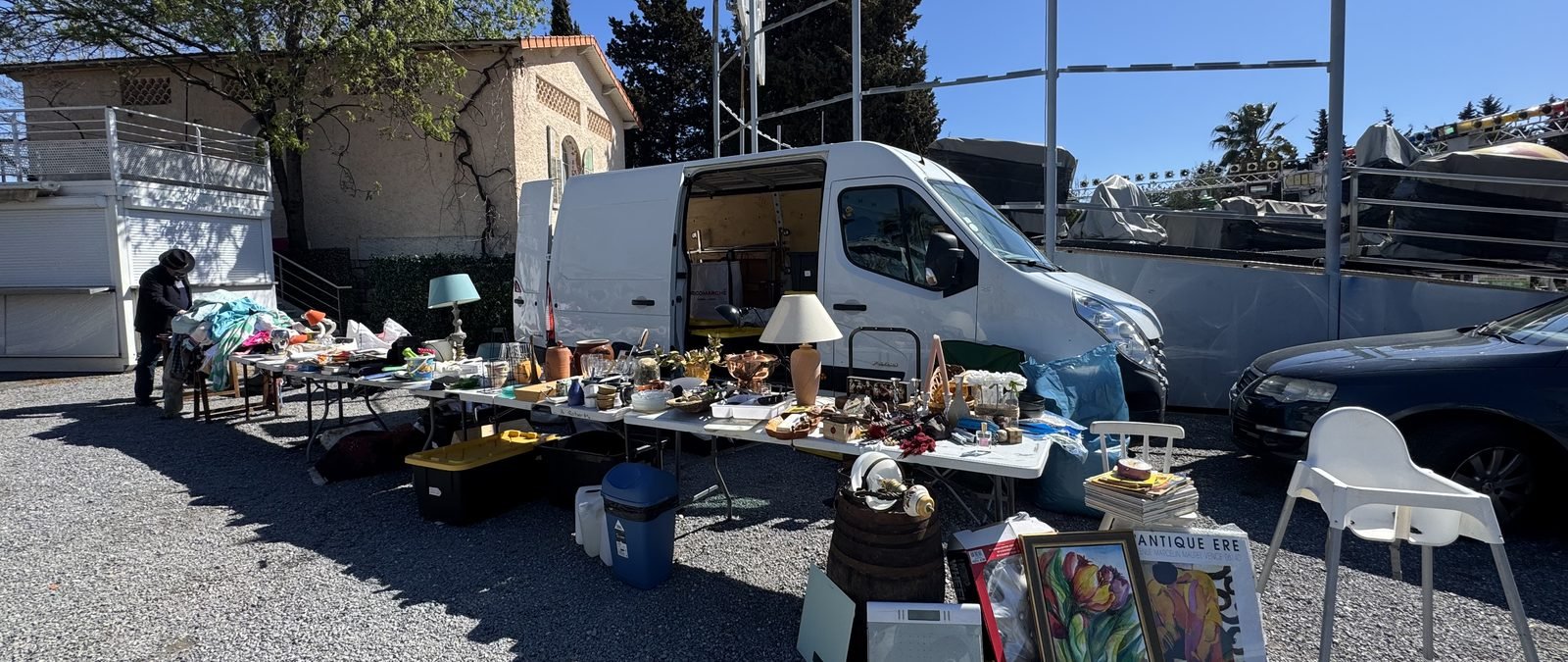
Our Sundays still start at the flea markets, and the earlier we go the better the finds. October mornings are colder now, so we bundle up in layers and shed them one by one as the sun comes up, and the morning slips away among the stalls.
When I want a change of scene, I'd head for the Cap d'Antibes and the coastal path, the sentier de Tirepoil. In August I told you to start early because there is no shade on it. In October you can walk it at any time of day: the sea on one side, the rocks underfoot and the light already softer by mid-afternoon. Allow about an hour and a half one way, then come back along the Chemin des Douaniers past the villas. The path closes in rough weather, so check before you go.
Afterwards I like to stop at La Petite Plage, on the Plage de la Garoupe, right by the water, for a cup of tea, or on the warmer October days something a little more refreshing. It's been under renovation, so check it's open before you set off.
On the Sundays we stay closer to home, our walk is along the Brague in Biot: peaceful, shaded and after the first rain the river is running again.
Village fêtes
The chestnut season
For me, October belongs to the chestnut. The trees grow in the hills behind the coast and every autumn the villages that live with them hold a fête: chestnuts roasted in big perforated pans over a wood fire, local produce on trestle tables and usually some music. These are village affairs rather than events staged for visitors, which is exactly why I think they are worth the drive.
Sat 17 Oct
Saint-Laurent-du-VarFête des vendanges et châtaignes in the old village.
Sun 18 Oct
Saint-Paul-de-VenceFête des vendanges et des châtaignes, Place de Gaulle.
Sun 18 Oct
TanneronFête de la châtaigne, in the hills better known for their mimosa in February.
Sat 24 Oct
SaorgeFête de la châtaigne, in the village stacked on the rock above the Roya. See my picks above.
Sun 25 Oct
ValdebloreFête des châtaignes, high up between the Tinée and the Vésubie.
In November
Antibes and CagnesThe coast catches up later: the Safranier quarter in Antibes on the 7th of November, Cagnes-sur-Mer on the 15th of November.
Vide-greniers & brocantes
Where Hervé is hunting this month
My husband does this for a living. He organises house clearances across the region: he sorts and values what is there, sells the pieces worth selling on the owner's behalf, gives what can be given to charities and makes sure the rest is properly recycled. So this section is his.
October is a good month to hunt. The summer visitors have gone, the second homes closed up in September have emptied onto the tables and the mornings are cool enough to walk the stalls properly. My advice, from someone who is still not a natural early riser: dress for the start. At seven in the morning in October, a brocante is colder than it looks. À ÉCRIRE PAR HERVÉ : your own October advice, in one or two sentences.
Every Mon
Brocante du Cours Saleya, NiceThe 12th, 19th and 26th of October. The east end of the Cours, professional; the good pieces go early.
Every Tue
Brocante professionnelle, AntibesThe 13th, 20th and 27th of October, Place des Martyrs de la Résistance.
Sun 1 Nov
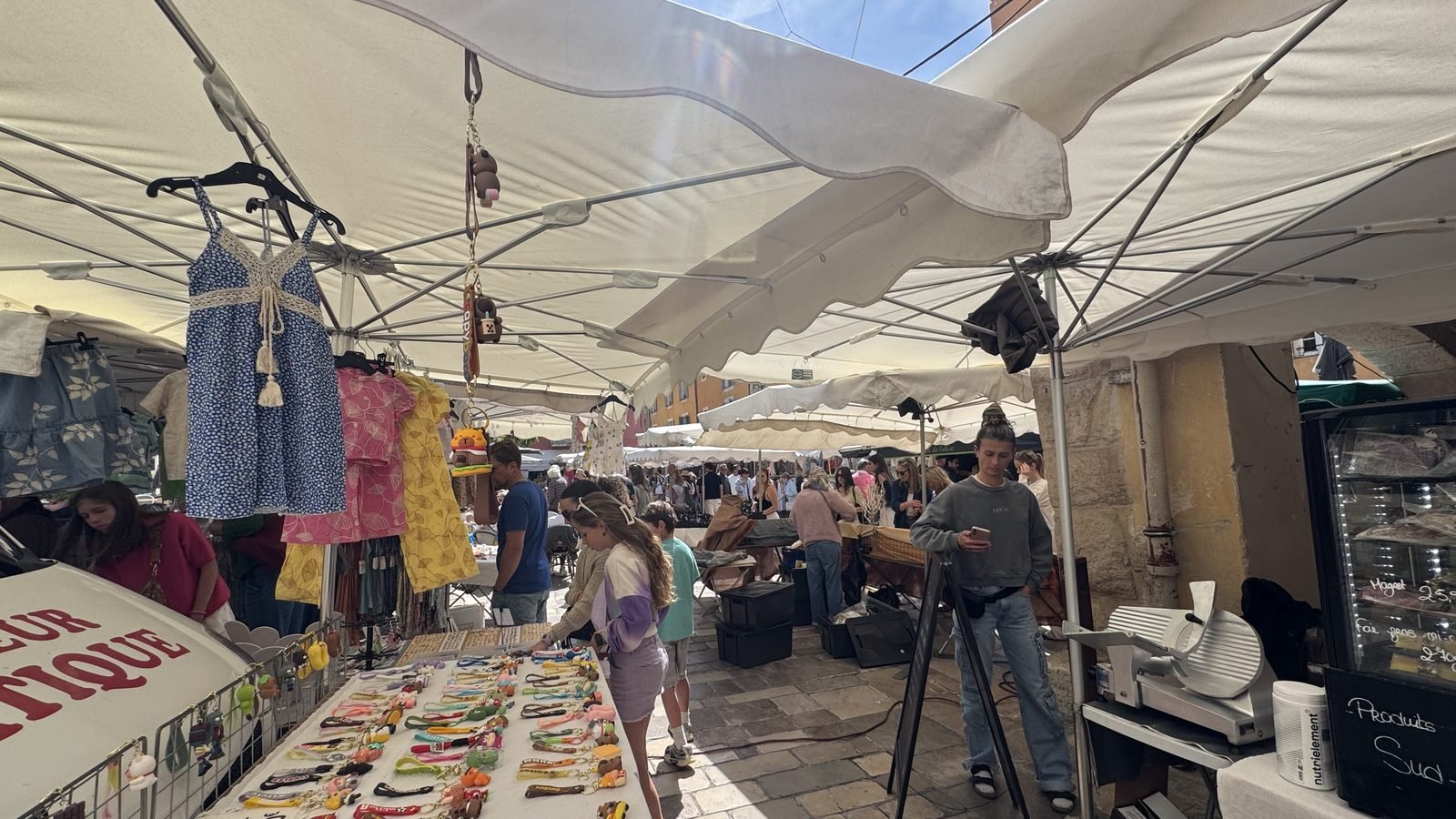
Antiques and brocante, ValbonnePlace des Arcades, first Sunday of the month, from six in the morning. Fifty to eighty dealers under the arcades. It is a real mix: some genuinely good antiques and about 30 percent of the stalls are clothes, for babies as well as adults. See the village of the month.
Sundays
The village vide-greniersOften where the best finds are. Dates move, so check the noticeboard outside the mairie before you go.
At the table
What's on the table in October
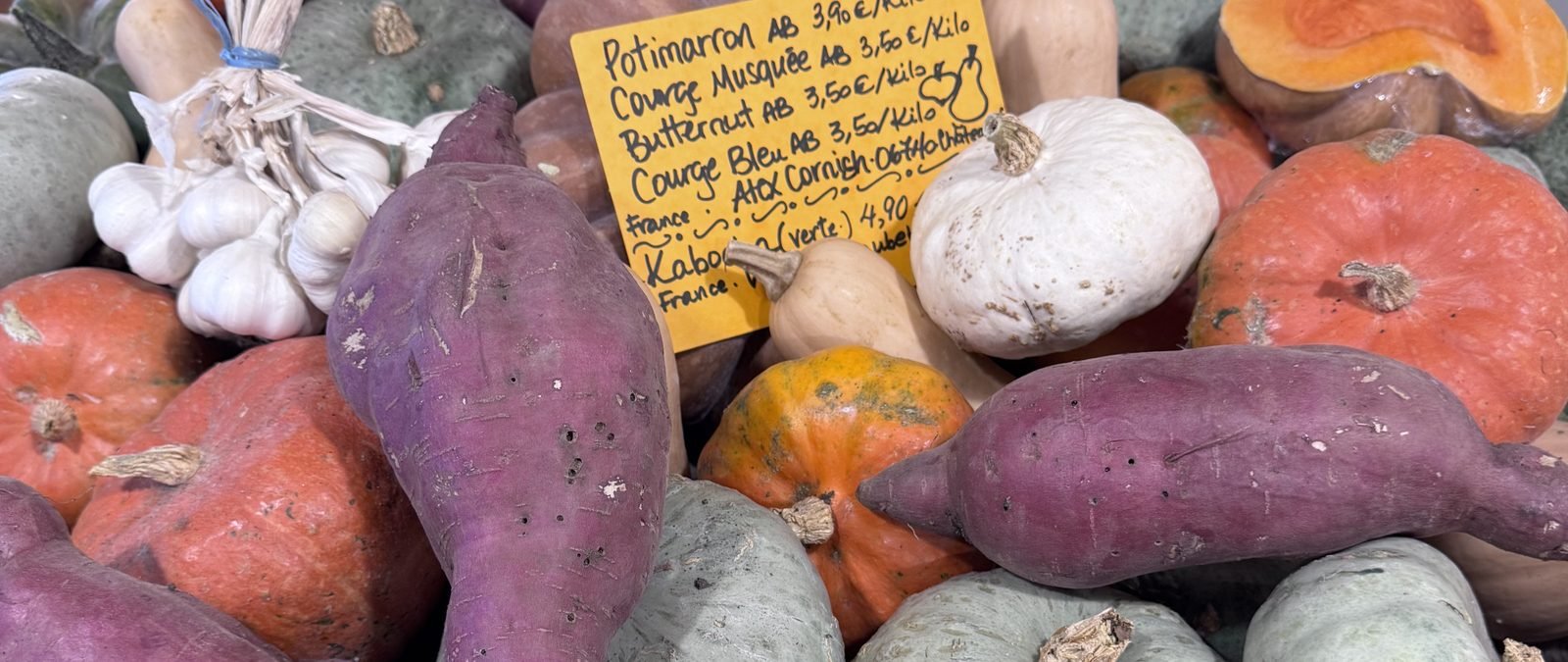
October is when the food here changes register and it is one of my favourite moments of the year to cook and eat. Tomatoes give way to pumpkins and courgette flowers to wild mushrooms. The terraces are still busy at lunch, but dinner moves indoors, to candlelit tables and the first slow-cooked dishes of the season.
Chestnuts. At every fête you'll find them roasted in paper cones and they taste of autumn. At home they are simple: score them, roast them in a heavy pan and eat them warm with a glass of red.
Mushrooms. Cèpes and other wild mushrooms appear on the market stalls and on menus in the hill villages, often cooked simply with garlic and parsley. Picking your own is a local passion. My only rule: eat nothing that someone qualified hasn't checked. Many pharmacies here will still look over your basket for you.
Daube. The daube niçoise, beef cooked slowly in red wine, comes back on the menus as soon as the evenings cool. In Nice the leftover sauce traditionally goes into the ravioli, which to me is the best part.
Inland, the game season. Hunting reopens in the autumn and in the arrière-pays you will often see civet de sanglier, wild boar stewed in wine, chalked up on the board.
What to see
Two reasons I head inland in October
With the coast so easy to love, it is tempting never to leave it. But October is the month I most want to go up into the hills. The air is clear, the colours are turning and the roads are quiet again.
The Roya valley
Saorge
A village that seems to hang in the air, its houses stacked up a rock face above the Roya gorge. You can reach it by the train from Nice and I think that is the best way to arrive: the station is below the village, so allow time and good shoes for the walk up.
If you go for the chestnut fête on the 24th (see my picks above), make time for the old Franciscan monastery above the village. It's worth the climb; check the opening times before you go.
Above Grasse
Gourdon and the Gorges du Loup
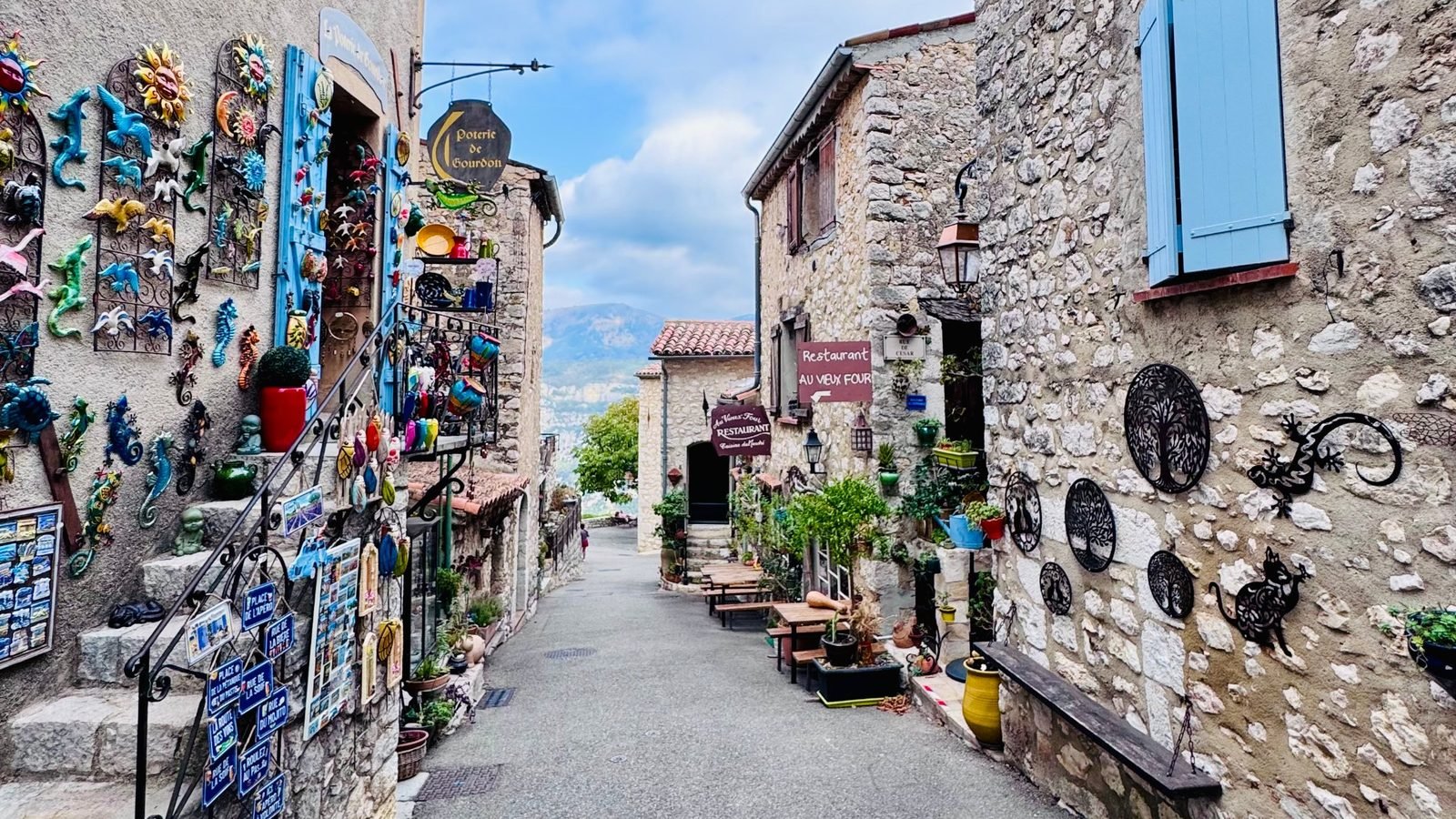
Gourdon sits on its cliff above the Loup, with a view all the way down to the sea. I'd come back through the gorge, past the Cascade des Courmes, which usually runs again after the first autumn rain.
On a clear October afternoon it is a beautiful drive and less than an hour from the coast.
The French lesson
Toussaint, chrysanthemums and the hour you get back
A page each month on how things are actually done here. Not grammar: the small rules nobody writes down and the ones I'd tell any friend who has just moved here.
The holiday
La Toussaint
All Saints' Day, the 1st of November, is a public holiday and the day French families visit the cemetery to put flowers on the graves. This year it falls on a Sunday, so there is no extra day off.
The flower
Le chrysanthème
In the days before Toussaint, florists and supermarket entrances fill with pots of chrysanthemums. They are for the graves. So whatever you do, never bring chrysanthemums to a dinner. Bring anything else.
The phrase
On gagne une heure
What everyone says the weekend the clocks go back (on passe à l'heure d'hiver). If you forget, you will arrive an hour early for something on Sunday; it happens to everyone once.
In the garden
October, the busiest month in the garden
If September starts the gardening year here, October is when the real work happens. The soil is still warm, the rain is coming and anything planted now has the whole winter to put down roots. If you only plant once a year, I'd make it now.
Plant trees, shrubs and hedges. The old French saying is À la Sainte-Catherine, tout bois prend racine: by Saint Catherine's day, the 25th of November, every cutting takes root. On this coast many gardeners start a month early.
Finish the bulbs. Narcissus, anemones and ranunculus can still go in now. Tulips wait until November, once the ground has cooled.
Look at the olives. Some people pick green olives in the autumn for curing. The harvest for oil comes later, in the winter.
Re-sow a tired lawn and cut back the watering. With the rain and the cooler nights, most gardens need far less than they did in September.
The market note
October: the offer you make now is signed in the new year
A short note each month on what I'm seeing in the property market, from the office rather than a press release.
The calendar. Buying in France happens in two stages: the compromis de vente, then the final deed at the notaire, usually around three months later. A private buyer of a home has a ten-day cooling-off period after signing the compromis. So a buyer who finds the right house in October will very often take the keys in January or February. For the international buyers I work with, that timing matters: the tax year, the school term, when to move the family. I always suggest thinking about it now rather than in December.
See a house in its true light. October is the best month to view a property. The first rain reveals what summer hides: how the garden drains, whether the drive stays passable, any damp in a north-facing room. The low sun shows which rooms will still get light in winter. If you are buying, I'd always try to see the house once in the rain.
Ask about the heating. The DPE, the energy rating every listing must show, tells you only part of the story. A winter electricity or fuel bill tells you the rest, so I always ask to see one. Many houses on this coast were built for the summer, and it is worth knowing how they feel in January.
For sellers. The buyers who came back in September are still looking and they are serious. A home that has not found a buyer by Toussaint often waits until the market picks up again in the new year, so if you are planning to sell this autumn, I'd aim to be on the market before the holidays rather than after.
Planning a move, or wondering what your home is worth? Write to me through the property page or come and have a coffee at the Valbonne office.